NAMED WWII Korea 1961 Berlin Crisis US Army Uniform Sgt Harold Smith S-3908 ID
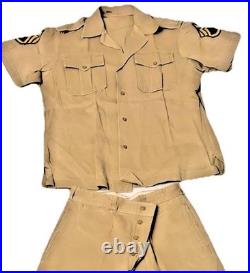
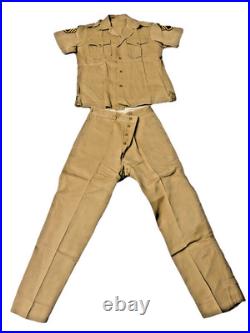
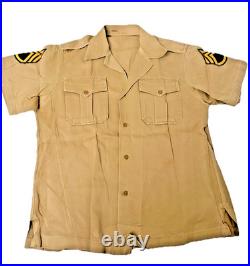
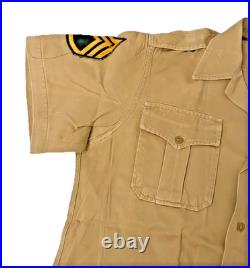
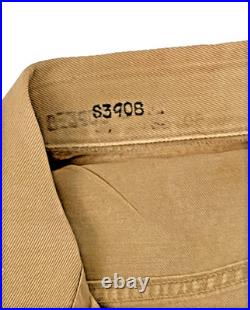
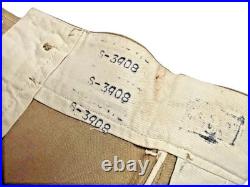
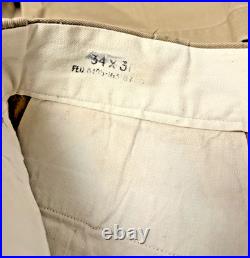
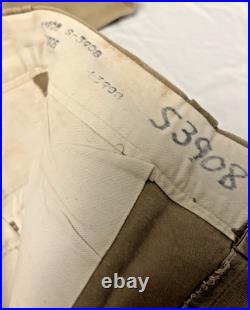
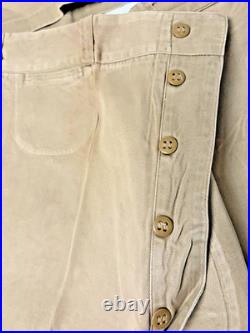
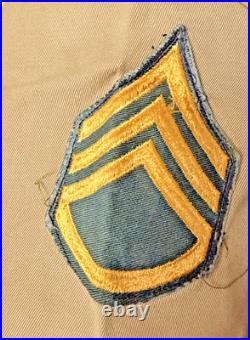

Army Summer/Tropical Khaki "Chino" Uniform Set (Short-Sleeve Shirt & Matching Button-Fly Trousers). Era: Vietnam War (Circa late 1960s - early 1970s). Size: Trousers stamped 34 x 31; Shirt fits like a Men's Medium/Large. Provenance: Fully Identified (ID'd) matching set belonging to the same soldier, featuring matching?
Laundry marks stamped on both pieces. "Gene" Smith's life represents the classic mid-century American story-a member of the "Greatest Generation" who quietly transitioned from frontline wartime combat to local community service, answering his country's call twice before settling into civilian life.
Here is a quick chronological overview of his life based on the military and community legacy he left behind. The Early Years and War Service c. The Calling: Harold grew up in the era of World War II and entered the US Army around the time of the Korean War.The Combat Veteran: He served with the legendary 1st Infantry Division ("The Big Red One"). During the Korean War, the 1st ID was deployed to Germany as a frontline strategic deterrent against the Soviet Union. Harold saw intense duty, proved his leadership under pressure, and rose to the rank of Sergeant (E-5), earning the right to wear the Big Red One combat patch on his right shoulder for the rest of his life.
Settling in Fort Smith (Mid-1950s). He didn't hang up his boots entirely, choosing to stay active as a "citizen-soldier" by joining the Arkansas National Guard, training out of Fort Chaffee and local armories. The Postal Career: To support his family, he took a job with the United States Post Office in Fort Smith.
The Sudden Call-Up: In October 1961, Cold War tensions exploded when the Soviets built the Berlin Wall. Kennedy mobilized the National Guard to prevent a communist invasion of Western Europe. Back to Germany: Because Harold was a seasoned, combat-experienced Sergeant, his leadership was vital. For roughly a year, Harold wore the very uniform you now hold, standing guard at the Fulda Gap on the knife's edge of the Iron Curtain. The Quiet Hero: When the Berlin Crisis subsided in late 1962, Harold was sent home and deactivated.He took off his 4th Armored Division uniform, carefully packed it away with his laundry stamps (?) intact, and put his blue postal uniform back on. When he passed away, he left behind a legacy deeply respected by collectors and historians alike-a man who served his country both on the battlefield and on the home front.